How To Change to Public or Private Networks in Windows 10.

Difference Between public or private network.

When you connect your Windows 10 PC with any Wi-Fi network then Windows classifies a network as either ‘public’ or ‘private’ and uses this classification to apply security features, such as the firewall, and the sharing of hard drives, folders, printers and so on.

Now, the question may come to your mind that what is the difference between ‘public and private’ networks and which network mode you should use. In this article, I am going to answer all your doubts related to this.  

Difference Between Public and Private Network in Windows 10.

Private networks have all sharing options enable, while public networks disable anything that might be a security threat.

Public network hides your PC from other devices on the network and you can’t be used for printers and file sharing. Use this for the networks you connect to when you’re out and about, such as a Wi-Fi network at a coffee shop.

Private network mode is for the network you trust on, such as home or work. In this network, your PC is discoverable to other devices and can be used for printer and file sharing if you set it up.

Change Public or Private Networks in Windows 10.

When a computer connects to a network, the appropriate public or private settings are selected. If you are having problems with sharing files or connecting to printers, it may be because the public network settings have been activated, which locks everything down.

In Windows 10, open Settings (Windows+i) and click ‘Network & Internet’.

Network and Internet

Select ‘Wi-Fi’ on the left, then click the network you’re connected to on the right.

Wi Fi Settings Public or Private


If you’re at home and you trust all the other devices and people that might be connected to your network, select Private in the ‘Network profile’ section. 

Public or Private Networks in Windows

How To Remotely Shut down a PC using Windows Command Prompt.

You can shut down all your PCs from a single Command Prompt window. You’ll need to change a few settings in advance, through.

On any PC you want to shut down remotely, click Start, type ‘services.msc' then press Enter.

Windows Services


Right-click the Remote Registry, select Properties, then select Automatic in the ‘Startup type’ menu and click OK.

Remote Registry


Remote Registry

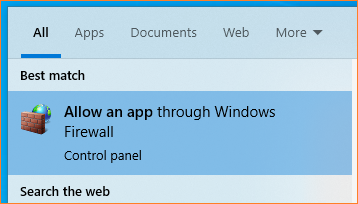
Now click Start again, type allow an app, and press Enter. This will open your Firewall settings.

Firewall settings


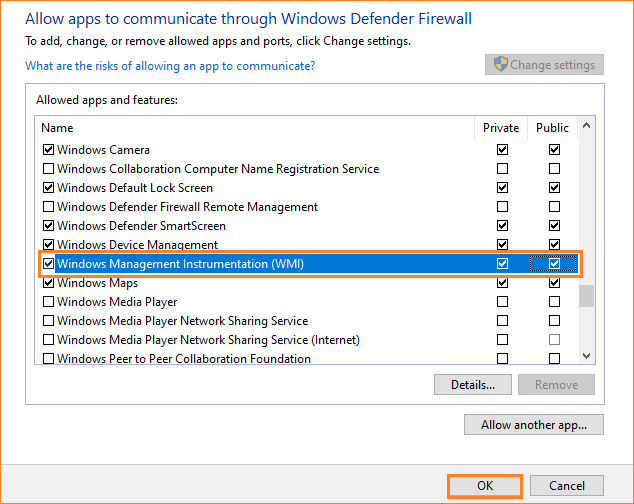
Click ‘Change settings’, scroll to Windows Management Instrumentation (WMI), then tick the box to the left of it and click OK.

Windows Management Instrumentation


Now, on your controlling PC(s), open Command Prompt and type shutdown /i. This will launch a Remote Shutdown box.

Remote Shutdown Dialog


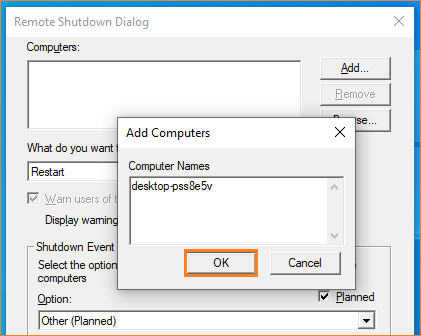
Click Add, then type the IP address or hostname of the other computer then click OK.

Remote shutdown dialog box

Note: Hostname is a name given to a computer to identifies them on your network. To know your hostname, type ‘hostname’ in Command Prompt, then press Enter.

Select Shutdown in the ‘What do you want these computers to do’ menu, type a message that will appear on the PCs you’re shutting down, then click OK.

Remote Shut down


You’ll need to be signed in to Windows with an administrator account on all computers for this to work.

Type Diacritics and Symbols Using Keyboard and Character Map in Windows.

Diacritics are accents and flourishes, é and Ù for example help guide pronunciation, while symbols are commonly used pictograms such as © and TM that often are not spoken but have specific uses in written text.

In many cases, they are available directly by combining Alt Gr (to the right of the space bar) with a shortcut key. So, Alt Gr+C gives you ©, Alt Gr+T produces TM and Alt Gr+R result in ®. Your keyboard may also be marked with accented characters, which are accessed in the same way.

Note: You can use Ctrl + Alt instead of Alt Gr. It works for all special characters on your keyboard.

On our keyboard, combining the vowel keys with Alt Gr lets us type á, é, í, ó, and Ú, while using it with the 4 key gives us the  symbol.

Character map Windows.


If the character you need isnt available directly, press Start, type map, and click "Character Map". This shows all the characters available in each of your installed fonts. You just have to click the one you want, followed by Select and Copy. Now switch to the program in which you want to use the copied character and press Ctrl+V to insert it.

Follow Raveling Tech on Facebook and Twitter for more such technology related posts.     

How To Hide and Reveal Drives in Windows File Explorer.

Hide and Reveal Drive.

Windows automatically assigns letters to your drives and partitions. But there may be a situation where you don’t need a drive letter-for example, should you want to ‘hide’ a drive from other users of your PC. Or, if you’re using a dual-boot system, you can hide your other operating system partition so it doesn’t show up as a drive within File Explorer.

Hiding the entire Drive is a good practice if you want to hide many files from the users of your PC. You can put all your secret files together in a specific Drive and hide the entire drive. 

Hide Drive Using Command Prompt.


To do this, click on Start and search for cmd, right-click on the Command Prompt option shown as a search result, and click on ‘Run as administrator.

Run cmd as administrator.


Now, use the ‘mountvol’ command, followed by the letter of the drive you want to hide, then the /d switch. For example, to hide a G drive, enter mountvol G: /d.

mountvol G: /d


After this, press Enter, and your chosen drive will be hidden from File Explorer.

There are many different ways to hide the drive in Windows but you have to go through so many steps which we have done in just one step using Windows Command Prompt.

Reveal Hidden Drive in Windows.


You can also reverse the process using Windows’ Disk Management tool.

Right-click Start and select Disk Management, then scroll to the drive you need to reassign a letter to in the Volume list in the top pane.

Right-click it and select ‘Change Drive Letter and Paths’. (“New Volume” without any letter assigned to it is your Hidden Drive).

Change Drive Letter and Paths.

Click Add, select the letter you want from the drop-down list, then click OK.

Assign Drive Letter.


Now you can see that hidden drive in your Windows File Explorer. You do this trick and keep your private files hidden from the other users of your PC. 

How To Turn any Folder into a Drive using Windows Command Prompt.

Virtual Drive

Windows only recognize partitions or physical drives as separate drives. However, using the ‘subst’ command you can turn any folder into a virtual drive that shows up with its own drive letter in File Explorer.

This is useful if, for example, you have a folder with specific types of files, such as pictures, or videos that you want to treat as a separate drive, for example. It also helps you to manage your files better in Windows PC.

To do this, type subst, followed by the drive letter you want to use, then the path of the folder. So typing subst G: C:\Users\Username\Videos (replace Username with your Windows account name) will create a virtual drive dedicated to hosting the contents of your Videos folder.  

Virtual Drive


If you want to remove the virtual drive, simply type subst, followed by the drive letter, then the /d switch-so, in my example above, typing subst G: /d will remove the virtual drive, but the contents will remain intact in its original location (C:\Users\Username\Pictures in this case).

How To Open Your WiFi Router’s Settings .

Router Settings.

There are so many changes that you can make through router’s settings like changing your network name, changing network password, creating a guest network, changing security settings, and many other options.


The process for accessing your router’s settings is the same for most makes and models, but there are some exceptions. In most cases, you just type the relevant router-settings address (or the router’s IP address) in your web browser. This can usually be found somewhere on the router itself (check the underside) or in the manual.

Find the Router’s IP Address.

192.168.1.1 is the IP address of most of the routers but it is not the same for all. You can confirm your router’s IP address using Windows Command Prompt.

Press Windows key, type cmd in the search box, and press Enter. Inside Command Prompt Window, type ipconfig and press Enter.

ipconfig


Scroll through the result until you find an entry named ‘Default Gateway’ and the number listed next to it is your router’s IP address.   

Router IP

You can try connecting to your router via HTTPS rather than HTTP (https://192.x.x.x.) because this is more secure, but you may find the protocol isn’t supported by less security-conscious manufacturers.

Find Wi-Fi Router’s Password. 

The username and password you need to log in should be printed there on the router itself unless you’ve already changed these details.

If you have never changed the router’s login detail, they will be ‘admin’ for username and ‘admin’ for a password. These are the default username and passwords for all routers but you should change the default admin password of your router.

If you are not going to change the default password, then someone can easily walk up to your router settings and can access your personal information without you knowing about it.

Suppose, In case, you have changed the router default password and now you don't remember your WiFi router password then you can refer to my blog post on how to recover forgotten WiFi passwords. In that post, I have explained how you can check your wireless network name and recover your password using Windows Command Prompt.

Different Router’s IP Address example.

For example, the address for Virgin Media’s Super Hub is http://192.168.0.1 or 192.168.100.1, if you’re using Modem Mode). You’ll find detailed instructions for it at bit.ly/vhub468.

For BT’s Smart Hubs, the address is 192.168.0.1, and TalkTalk’s Wi-Fi Hub settings can be accessed at 192.168.1.1.

Some standard IP addresses are:
  • Apple: 10.0.1.1
  • ASUS: 192.168.1.1
  • Belkin: 192.168.1.1 or 192.168.2.1
  • D-Link: 192.168.1.1 or 192.168.0.1
  • Linksys: 192.168.1.1 or 192.168.0.1
  • Netgear: 192.168.0.1 or 192.168.0.227

How To Remove Duplicate Files on Windows 10 PC.

Duplicate file.

Duplicate files on your PC do nothing except consuming hard drive space and making the PC slower. It is easy to inadvertently accrue a vast number of duplicate files-copies of photos, music tracks, videos, documents, and so on.

You can use Duplicate File Finder to search and remove multiple instances of identical items, and the best part of this tool is that it can find duplicate files even if they have different names. It is also capable of removing duplicates from Cloud-storage services like Google Drive and Dropbox.

By default, it searches the main folder on your PC (Desktop, Documents, Music, Picture, and Downloads), but you can specify custom folders if you wish, and have the program skip small files (under 100KB), which are unlikely to be of interest.

Find Duplicate Files and Remove them from Windows.

Download Easy Duplicate Finder for Windows and install it on your computer.

After the installation is complete, open the application and scan the hard drive or SSD using File Search mode.

Duplicate Files Finder.


The scanning process may take time depending upon the number of files your computer hard drive have.

Search Duplicate File.


Once Duplicate File Finder has scanned your system, the program presents its findings. When you’re ready, select your file management preference or click a button to automatically move your duplicates to the trash.

Remove Duplicate Files.


If you accidentally delete those files that you don’t wish to delete, then you can use the “Undo” feature of the app to recover those files.

How To Schedule or Draft Your Tweets from Twitter Web App.

Twitter

Twitter now allows users to schedule tweets right from the Twitter web app to send at a specific time. Now users can also save draft tweets to post them later.

Twitter had originally said it was “experimenting” with the feature back in November, and if you didn’t get access to that feature, you can use Tweetdeck or another third-party service that supported this schedule tweets feature.  

Schedule Tweets to send at a specific time. 

Twitter recently launch Schedule Tweets option to post any tweet at a specific time. However, this feature is only available from the Twitter web app. To use this feature:

Open your Twitter account on the web and compose a tweet, you can see a little calendar icon on the bottom row of icons of the tweet window.

schedule tweet option.


Click on that calendar icon, now you can set Date, Time, and Time zone for scheduling your tweet to send at a specific time. Click on Confirm to save.

Set schedule time and date.


You can also see all scheduled tweets by clicking on the ‘Schedule Tweets’ option from that window. 

Save Draft Tweets on the Twitter desktop. 

Before, the save draft tweets feature was only available on Twitter's mobile app and now you can use this feature on the Twitter web app too.

To use this feature, open your Twitter account on your favorite browser on your PC. Open the Tweet window to write your tweet which you want to save as a draft and click on the cross mark to close the window.

Save Draft Tweet.


A pop-up will appear asking you that you want to save the tweet as a draft or discard it completely. Click on Save.

To reopen your draft tweets open the Tweet window (see image for better understanding) and click on the 'Unsent Tweets' option in the upper-right corner of the window.  


DON'T MISS

Nature, Health, Fitness
© all rights reserved
made with by AlgoLesson